
[2026 Guide] Fingerprinting After a Korean Police Investigation: Does Refusal Mean a “Non-Transfer” (Innocence)? [LIBRO, English Speaking Lawyer]
Hello. As a legal partner specializing in assisting foreigners within the Korean legal system, I understand how overwhelming a police investigation can be.
If you want to know about, The Trap of the Police Protocol (Jo-seo) & Your 3 Rights (2026 Korea Police Investigation Guide), please refer to this link below. (2026 Fingerprinting Guide)
If you want to know about Korea Police Guide: Avoiding the Trap & 3 Million Won Fine (2026 Guide), please refer to this link below.
If you want to know about The 48-Hour Golden Time & Warrant Review (2026 Arrest in Korean Guide), please refer to this link below.
After hours of questioning, the final step often involves a police officer asking for your fingerprints. Many of my clients ask: “They didn’t take my fingerprints—does that mean my case is closed as ‘No Suspicion’?” or “If I refuse, will they drop the case?”
Today, we will dive deep into the legal grounds for fingerprinting and what it actually means for your case.
💡 Quick Summary: A “Non-transfer Decision” (Bul-song-chi) by the police is a procedural result, whereas an “Acquittal” is a court verdict. Do not assume the outcome of your case solely based on whether your fingerprints were taken.
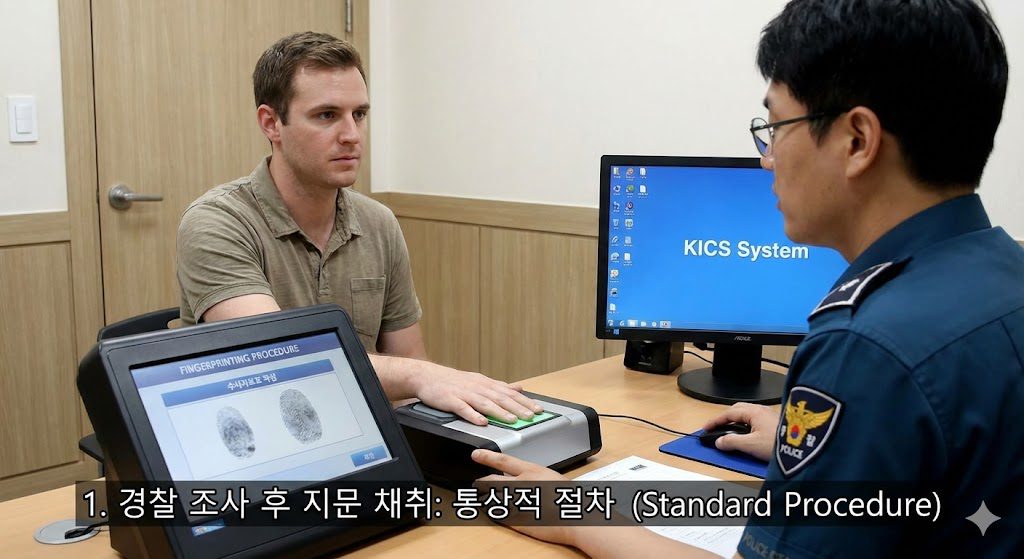
1. Legal Grounds: Why Does the Police Take Fingerprints?
In South Korea, fingerprinting suspects is not just a custom—it is a standard procedure rooted in law.
- Legal Basis: Under the Act on the Lapse of Criminal Sentences, etc., investigative agencies must create an “Investigation Data Sheet” for suspects, which includes collecting fingerprints.
- KICS Registration: The data is uploaded to the Korea Integrated Criminal Justice Information System (KICS). This is a unified electronic network shared by the Police, Prosecution, Courts, and Ministry of Justice to manage everything from investigation to sentencing.
- Evidence Value: Fingerprints serve as persuasive evidence. Matching fingerprints found at a crime scene with those of a suspect is a powerful tool in proving a case (e.g., Ulsan District Court Ruling 2011Gohap235).
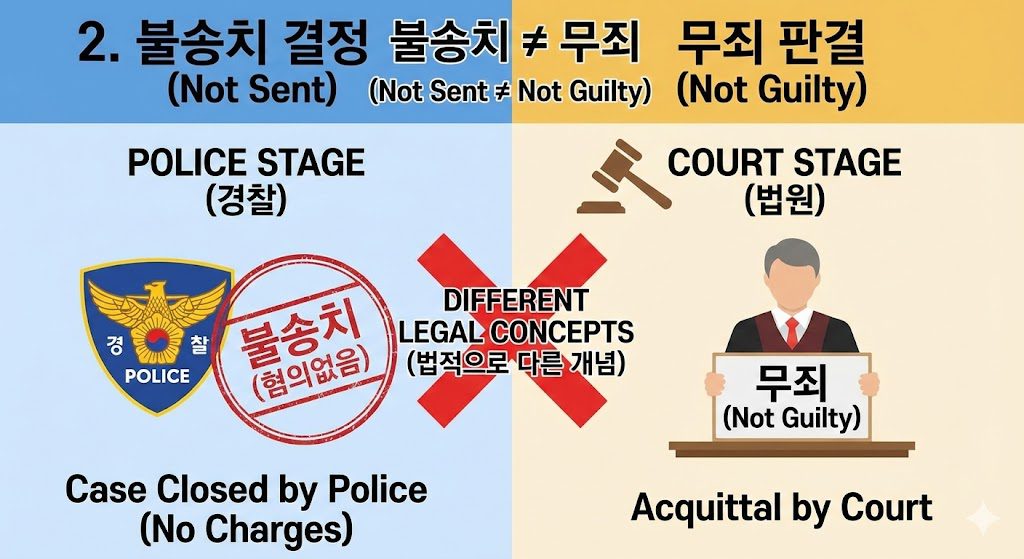
2. “If I don’t give my fingerprints, will it be a ‘Non-transfer’?”
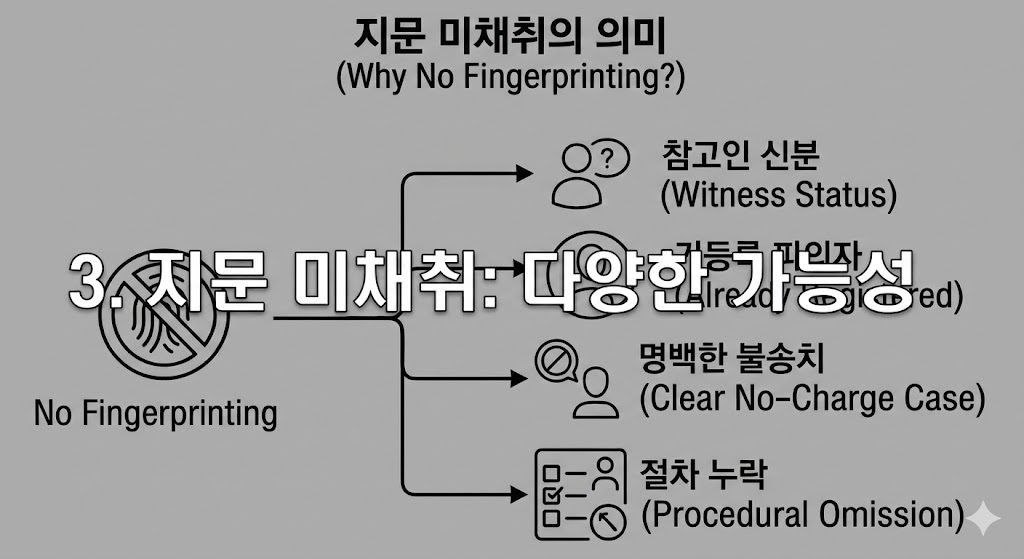
The short answer is: No. In fact, refusing to provide fingerprints does not magically stop the case. If the police decide not to take your fingerprints, it usually happens for one of the following reasons:
① You were questioned as a “Witness” (Reference Person)
This is the most positive scenario. If you were called in as a Witness (Cham-go-in) rather than a Suspect (Pi-ui-ja), the police generally do not take fingerprints. Check if your statement document is titled [Witness Statement(참고인진술조서)]. This usually means you are not the one being charged.
② You are already in the KICS System
If you have been investigated for a different case in Korea before, your “Ten-Fingerprint” data may already be in the KICS system.
Note: Fingerprints taken at the airport/immigration for your visa are for “Immigration Management” and are separate from the “Criminal Investigation” fingerprints stored by the police.
③ Clear grounds for a Non-transfer Decision
According to the Rules on the Scope of Criminal Suspects for Fingerprinting, the police may skip this step if it is crystal clear that the case will result in No Suspicion (lack of evidence) or No Right to Prosecute (statute of limitations expired, etc.).
④ Administrative Error
Sometimes, an officer is simply busy or forgets. In this case, they might call you later to come back just for the fingerprints.
3. What Happens if You Refuse?
Some people believe they have a “right to refuse” to protect their privacy. Here is the legal reality:
- Past vs. Present: In the past, refusing was a punishable offense under the Minor Offenses Punishment Act. However, the Constitutional Court ruled this unconstitutional (2002Hun-Ga17), so you can no longer be fined specifically for the act of refusal.
- Practical Disadvantages: While you won’t get a separate fine, refusal sends a very negative signal. It can be interpreted as an intent to flee or destroy evidence, which the police may use as grounds to request an arrest warrant or a search and seizure warrant.
4. Comparison Table: Fingerprinting vs. Outcome
| Category | Fingerprints Taken | Fingerprints NOT Taken |
| Legal Status | Officially booked as a ‘Suspect’. | Witness, already registered, or clear innocence. |
| Case Outlook | Standard procedure; must wait for the result. | Very positive if you are a ‘Witness’. If you are a suspect, it might just be a clerical skip. |
| Visa Impact | Potential impact if found guilty later. | Generally no direct impact if you are a ‘Witness’. |
| Recommended Action | Maintain consistency in statements. | Confirm your status (Witness vs. Suspect). |
5. Detailed FAQ for Foreign Residents
Q1. Does fingerprinting mean I now have a ‘Criminal Record’?
A1. No. Fingerprinting is just a step in the investigation. You only get a “criminal record” if a court finds you guilty. If your case ends in a Non-transfer (Police), Non-indictment (Prosecution), or Acquittal (Court), you will not have a criminal record.
Q2. The officer said I’m a “Witness,” but now they want my fingerprints. Why?
A2. This is a warning sign. It may mean your status has changed from Witness to Suspect. Statements made as a witness can be used against you later, so you should seek legal counsel immediately at this stage.
Q3. Can the police use physical force to take my fingerprints?
A3. Generally, they won’t grab your hands by force immediately. However, if you continue to refuse, they can obtain a Search and Seizure Warrant from a judge, which allows for a more “forceful” collection. This creates a very negative record for your case.
Q4. I didn’t get fingerprinted, so I’m 100% safe, right?
A4. Not necessarily. The final decision is only official when you receive a Notice of Result. Do not assume you are “clear” until the paperwork confirms it.
💡 A Word from Your Lawyer
As a foreigner, the Korean police station is a daunting place. However, remember that fingerprinting is a matter of “formality,” not “guilt.” What truly matters is the content of your statement and the legal briefs submitted by your lawyer. Whether they took your fingerprints or not, do not navigate the system alone based on guesses. If you are unsure of your current status, it is vital to consult with a professional to review your case.
Do you have questions about your recent police investigation?
Don’t wait in anxiety. Contact my office today to verify your status and build a solid defense strategy.
Attorney Seok Jun Kang


