
2026 Deposit in Korea Guide. Landlord Won’t Return Deposit? Leasehold Registration Order (Imchakwon-deunggi)[English Speaking Lawyer. LIBRO]
2026 Deposit in Korea Guide: 3 Critical Steps to Save Your Deposit
Introduction
Are you one of the 2 million foreign residents in Korea worrying about your Jeonse or Wolse deposit?
Foreigner Leasehold Registration (known in Korean as Imchakwon-deunggi-myeongryeong) is the single most important legal procedure for expats in Korea who need to move out before receiving their deposit back.
Here is the harsh reality of Korean Real Estate Law in 2026: If you move out (change your address) without completing this registration, you legally lose 100% of your “Opposing Power” (Daeryeok) and “Right of Preferential Repayment.”
To prevent this financial disaster, LIBRO Global Client Services presents this essential 2026 Guide. We will cover the 3 critical steps, the 4 required documents, and how to claim 12% delayed interest on your money.
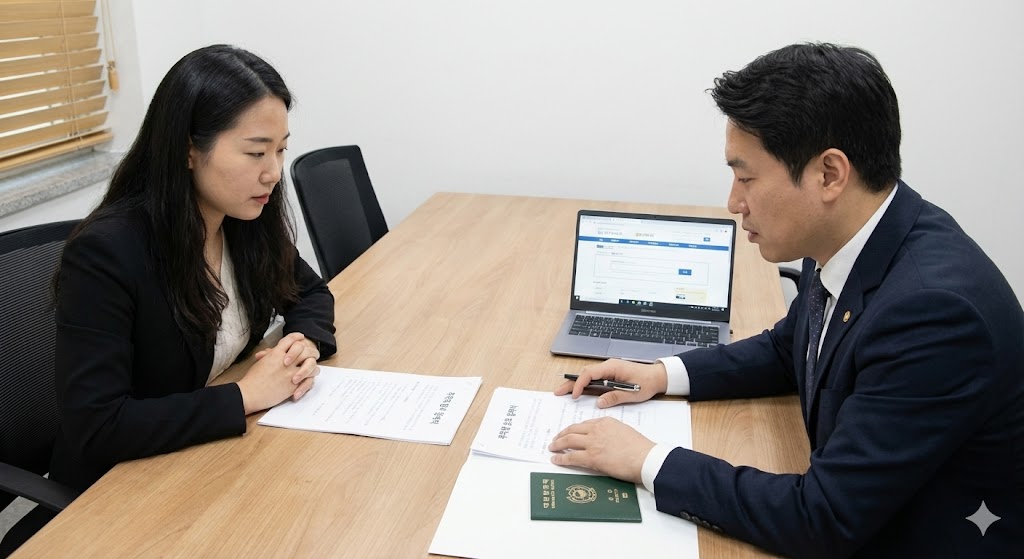
1. Can I Move Out? The Risk of Losing ‘Opposing Power’in 2026
The Korean Housing Lease Protection Act protects your deposit only if you maintain two things:
- Residence (Living in the house)
- Address Registration (Reported on your ARC/F-4 ID)
If you move to a new house without a court order for Foreigner Leasehold Registration, your legal rank for repayment drops to the bottom of the list. Completing this process effectively “locks” your priority status on the official Real Estate Registry, allowing you to move safely while keeping your money protected.
[Table 1] Moving Out in 2026: Unregistered vs. Registered
| Scenario | Moved Out WITHOUT Registration | Moved Out WITH Registration |
| Legal Status | Opposing Power (Daeryeok) LOST Immediately | Opposing Power MAINTAINED |
| Priority Rank | Becomes last in line for repayment | Keeps original 1st rank priority |
| Auction Risk | High risk of total loss if house is auctioned | Protected even if house is auctioned |
| Interest Claim | Cannot claim delayed interest | Can claim 12% delayed interest |
💡 Legal Tip: Never hand over the door passcode or remove all your belongings until LIBRO Global Client Services or your legal representative confirms the registration is complete on the paper registry.
2. Step 1: Prepare 4 Documents for Registration
Unlike Korean citizens, expats must provide specific proof of residency history. If even one document is missing or incorrect, the court will issue a “Correction Order,” delaying your move by weeks.
You must prepare the following 4 essential documents.
[Table 2] Required 4 Documents Checklist
| Document Category | Specific Requirements | Critical Note |
| 1. Identity & Address | Certificate of Alien Registration (or Domestic Residence Report) | Must include “History of Address Changes” to prove continuous residency. |
| 2. Lease Contract | Original Lease Contract | Must have the Fixed Date (Hwak-jeong-il-ja) stamp from the district office/community center. |
| 3. Termination Proof | Content Certification (Naeyong-jeungmyeong) or Text Messages | Evidence sent 2 to 6 months before expiration clearly stating refusal to renew. |
| 4. Property Info | Real Estate Registry (Deunggi-bu-deung-bon) | Must be issued recently (within 1 month). |
3. Step 2: The Application Process & Case Study
You can apply through the Supreme Court Electronic Litigation Website. However, legal complexities often arise for foreigners regarding name matching (Passport vs. ARC) and inheritance laws.
[Case Study] Handling Deposit Inheritance for a Deceased Tenant
In a recent case handled by LIBRO Global Client Services, a foreign tenant passed away before receiving the deposit.
- The Problem: Korean courts typically apply the foreigner’s “Home Country Law” for inheritance, which requires complex apostilled documents from abroad.
- The Solution: We utilized the “Renvoi” doctrine in Private International Law. We argued that since the deceased lived in Korea, Korean Civil Law should apply.
- The Result: The spouse and children were successfully recognized as heirs in Korea and secured the full deposit through the Leasehold Registration.
If your case involves complex issues like inheritance, visa changes, or uncooperative landlords, professional legal assistance is highly recommended.
4. Step 3: Verifying the Registration (The Most Important Step)
Once the court grants the order, do not move out immediately. You must verify that the Registry Office has actually updated the property’s record. This usually takes 1-2 weeks after the court decision.
Verification Checklist:
- Receive the decision text from the court.
- Wait for the Registry Office to process the order.
- Issue a new Real Estate Registry (Deunggi-bu).
- Look at “Section B” (Eul-gu) for the specific text.
[Table 3] What to Look for in the Registry (Eul-gu)
| Section | Key Term | What it means |
| Rank No. | Housing Leasehold (Jutaek-Imchakwon) | The leasehold is legally registered. |
| Rightsholder | Your Name | Confirm your English name matches your ARC exactly. |
| Amount | Deposit Amount | Ensure the full unpaid deposit is listed. |
Only after confirming these details on the official document is it safe to move out.
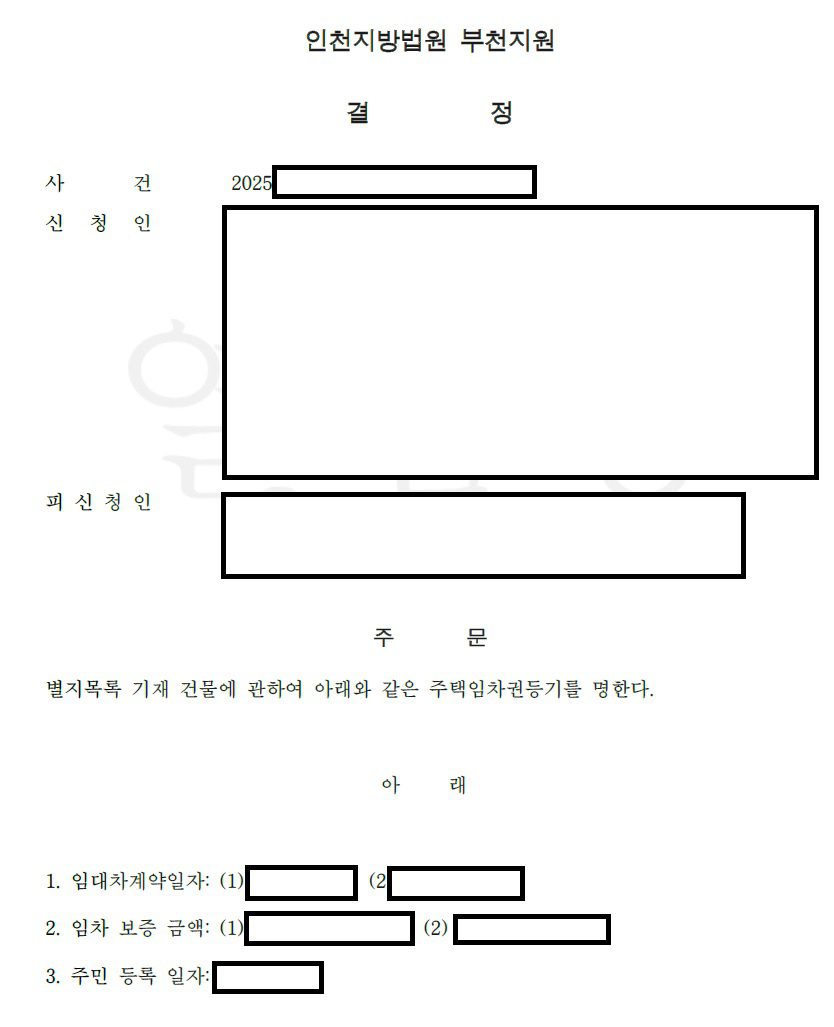
[This document is a formal Housing Leasehold Registration Order issued by the Bucheon Branch of the Incheon District Court in 2025. The court has officially ordered the registration of a leasehold for the building specified in the attached list to legally protect the tenant’s interests. The order explicitly records essential details of the tenancy, including the lease agreement date, the total lease deposit amount, and the tenant’s resident registration date. In the Korean legal system, this order is a crucial mechanism that allows a tenant to maintain their “opposing power” (legal seniority) and “priority repayment rights” over their security deposit, even after they physically move out of the property.]
FAQ: Foreigner Leasehold Registration
Q: Can I do Foreigner Leasehold Registration without an ARC in 2026?
A: No. The registration requires proof of address registration (ARC or F-4 Domestic Residence Report). If you have already surrendered your ARC at the airport, the process becomes extremely difficult. Contact LIBRO immediately.
Q: How long does the process take?
A: usually 2-3 weeks from application to final registration. Missing documents will delay this timeline.
Q: Can I get the legal fees back?
A: Yes. Under the Civil Act, you can claim the costs of the Leasehold Registration from the landlord.
Conclusion
The Foreigner Leasehold Registration is your strongest defense against deposit loss in 2026. It allows you to move on with your life while keeping your money legally protected. Do not risk your life savings by moving out without it.
Need expert assistance with your Leasehold Registration?
[Contact LIBRO Global Client Services Today]
LIBRO Global Client Services
Attorney Seok Jun Kang


