
[2026 Guide] Three Critical Risks of Rent Delinquency. English Speaking Korean Lawyer [LIBRO]
For foreign business owners in Korea, navigating the legal landscape of commercial leases can be a daunting task. The Commercial Building Lease Protection Act (상가건물 임대차보호법) provides essential safeguards, but failing to understand its specific mechanics can lead to significant financial risks.
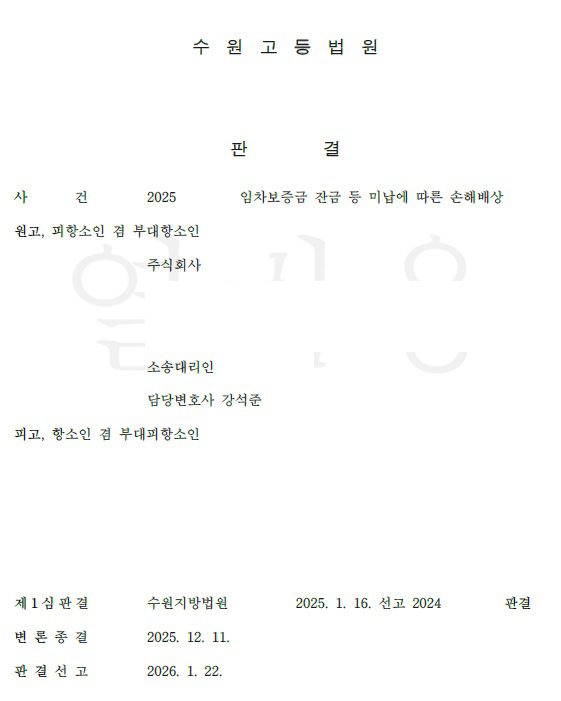
Based on a recent successful litigation regarding unpaid rent and the return of investment support fees, I have summarized the key legal points you must know to protect your business. (English Speaking Korean Lawyer)

🏢 Three Critical Risks of Rent Delinquency
In Korea, “delinquency” is measured by the total amount owed, referred to as “3 terms of rent” (3기분 차임).
1. Immediate Termination of the Lease
An owner can legally terminate your lease if the total unpaid amount reaches the equivalent of three months’ rent.
- The “Notice” Rule: The immediate termination right only holds if the debt is at least 3 months’ worth at the time the termination notice is delivered. If you pay down the debt to below the 3-month threshold before the landlord’s notice arrives, the “immediate termination” requirement is not met.
2. Refusal of Lease Renewal
Under the Act, a tenant can usually request renewals for up to 10 years.
- Past History Matters: If you have ever had a delinquency record reaching 3 months’ worth, the landlord has the right to refuse your renewal request later. Even if you eventually paid everything back, the past history of delinquency remains a legal ground for refusal.
3. Loss of Premium (Gwonligum) Protection
If you have a history of 3-term delinquency, you lose the legal protection to recover your “Premium” or “Key Money” (Gwonligum) from a successor tenant. This can be a devastating financial loss when you decide to close or move your business.
💰 Investment Support Fees: They Aren’t “Free Money”
Many landlords offer “Rent-Free” periods or “Investment Support” (시설지원금) to help with interior costs.
- The Proportional Refund Rule: Most contracts specify a minimum operation period (e.g., 36 months). If the lease is terminated early due to your rent delinquency, you must refund the support fee proportionally based on the remaining months.
- Contract Checkpoint: Always check if your contract defines the refund calculation based on the “remaining months” and verify the exact duration you are obligated to maintain the business.
⚖️ Security Deposits, Deductions, and Interest
The Burden of Proof for Deductions
When a lease ends, the landlord will deduct unpaid rent and management fees from your security deposit.
- Proof Requirement: The landlord is legally responsible for proving exactly what was deducted and why. Conversely, as a tenant, you must keep meticulous records of bank transfers and settlement statements to ensure the deduction is accurate.
Escalating Interest Rates
If a dispute leads to a lawsuit, the financial burden increases significantly:
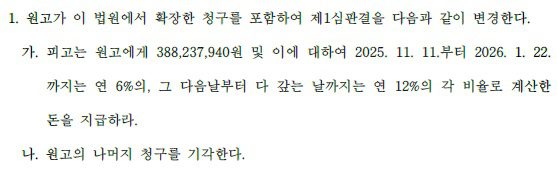
- Pre-Lawsuit: Interest is generally calculated at a rate of 5% to 6% per year (Civil or Commercial law).
- Post-Lawsuit: Once the legal complaint is served, the rate jumps to 12% per year under the Special Act on Litigation. Delaying payment during a trial can become extremely expensive.
📊 Summary of Tenant Rights and Obligations
| Category | Legal Standard | Key Note |
| Termination | Owed amount reaches 3 months’ rent | Must be 3 months’ worth at time of notice |
| Lease Renewal | Up to 10 years total | Past 3-term delinquency voids this right |
| Rent Increases | Capped at 5% per year | Clauses prohibiting objections to increases are void |
| Interest Rates | 12% after lawsuit service | 5–6% for the period prior |
| Premium Recovery | Protected by law | Void if rent was ever 3 months overdue |
💡 Frequently Asked Questions (FAQ)
Q1. What happens if my lease expires and neither of us says anything?
A. This is called “Implied Renewal” (묵시적 갱신). The law views the lease as renewed for 1 year under the same conditions. In this case, the tenant can terminate the lease at any time by giving notice; the termination becomes effective 3 months after the landlord receives the notice.
Q2. My landlord hasn’t provided the marketing support they promised. Can I stop paying rent?
A. Legally, no. Unless the landlord’s breach makes it impossible to use the space at all, you cannot unilaterally stop paying rent. You should pay rent and separately claim damages for their breach of contract.
Q3. Can the landlord block me from getting my “Premium” (Gwonligum) from a new tenant?
A. The law prohibits landlords from “unreasonably interfering” with your premium recovery. Examples of interference include demanding an excessive rent increase from the new tenant or refusing a new tenant without a valid reason. However, if you have a history of 3-term delinquency, this protection is gone.
Q4. Can I just tell the landlord to take the unpaid rent from my deposit?
A. No. The security deposit is a guarantee for the landlord, not a credit line for the tenant. The landlord has the right to demand rent payment even if they hold a large deposit. If you reach the 3-term delinquency threshold, they can terminate the lease regardless of the deposit amount.

LIBRO Global Client Services
Attorney Seok Jun Kang


