
[2026 Guide] The “Reality Gap” in Korean Product Payment Disputes: Managing Tax Invoices and Delivery Records. English Speaking Korean Lawyer [LIBRO]
Introduction
For many foreign CEOs in Korea, the transition from a successful product launch to a payment dispute can be jarring. In high-stakes manufacturing or supply sectors—such as precision components, cosmetics, or electronics—disputes often boil down to a single question: “Did you actually deliver the quantity you billed for?”
Drawing from my experience in complex B2B litigation involving cross-border supply chains, here is the strategic roadmap for navigating these disputes. (English Speaking Korean Lawyer)

1. The “Tax Invoice” Trap: Why Paperwork Isn’t Everything
In Korea, the Tax Invoice (Se-geum-gye-san-seo) is the king of administrative records. It is often the primary evidence used to claim that a sale occurred. However, a common mistake is assuming that a filed tax invoice is absolute proof of delivery.
- The Discrepancy Risk: If a manufacturer issues a tax invoice for 100 units, but the third-party logistics (3PL) warehouse records show only 80 units were received, the court will look for the “Real Transaction.”
- The Ruling Trend: While a tax invoice creates a strong “presumption” of a transaction, it can be overturned by inconsistent Delivery Notes (Georae-myeong-se-pyo) or warehouse logs. If your records are messy, even a 1st-instance judgment may rule against you despite having filed all your taxes.
2. The “Duty to Inspect” and the Danger of Silent Use
Under the Korean Commercial Code, business entities have a strict Duty to Inspect and notify.
- Implied Acceptance: If you receive goods and use them in your production line or sell them to a third party without a formal protest, the court may deem that you have “accepted” the quality and quantity.
- The Timing Rule: Waiting until a lawsuit begins to claim “the quality was poor” or “the quantity was short” is often too late. Without a formal, documented rejection (Notice of Non-Conformity) issued shortly after delivery, your defense against a payment claim weakens significantly.
3. Facing the “Provisional Execution” (Post-Judgment Risk)
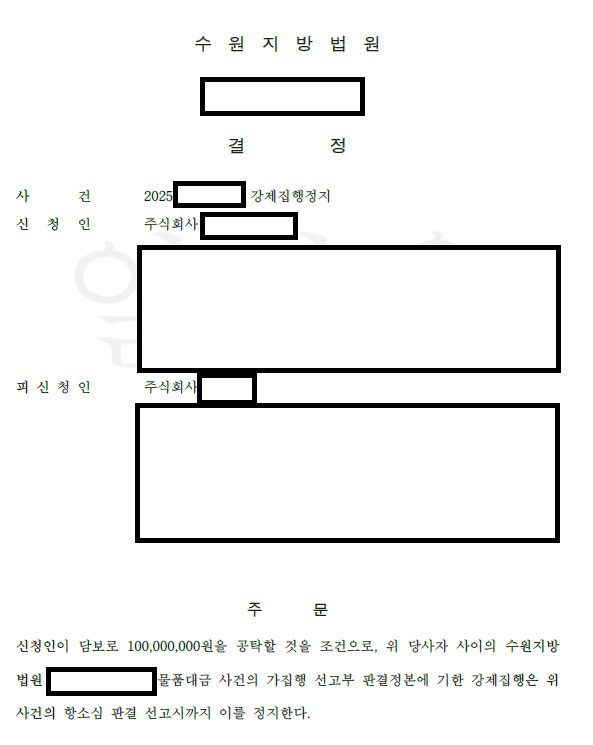
In Korea, losing the 1st-instance trial is not just a moral defeat—it is a financial emergency. Under Article 213 of the Civil Procedure Act, most money-related judgments include a clause for Provisional Execution.
- Immediate Seizure: This allows the winner to seize your bank accounts or assets immediately, even if you file an appeal to the High Court.
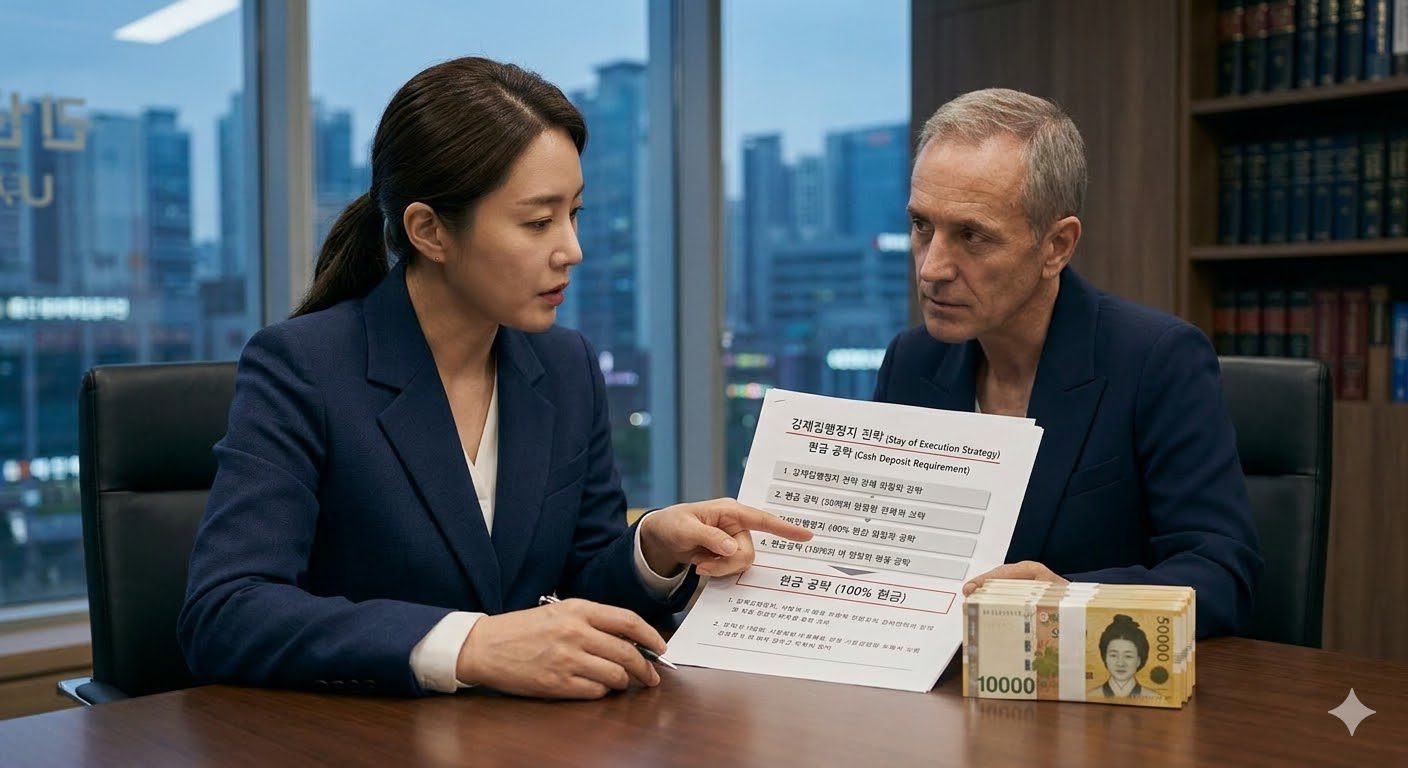
- Strategic Defense: To stop this, you must apply for a Stay of Execution. However, be prepared to deposit 100% of the judgment amount in cash with the court as security. This “Discretionary Stay” is not a right; it is a request for the court’s mercy to preserve your company’s liquidity while the appeal is pending.

💡 Comparison: Strong vs. Weak Claims in Payment Disputes
| Strategy Component | Winner’s Approach (Best Practice) | Loser’s Approach (Common Pitfalls) |
| Evidence | Matches 3PL logs with Tax Invoices perfectly. | Relies solely on Tax Invoices; lacks logs. |
| Rejection | Formal “Notice of Defect” sent via email/mail. | Verbal complaints via phone or messenger. |
| Counter-Strategy | Pre-emptively analyzes “Stay of Execution” costs. | Assumes appeals automatically stop payment. |
| Legal Basis | Uses both Warranty and Non-performance claims. | Relies on generic “It doesn’t work” claims. |
❓ Frequently Asked Questions (FAQ)
Q1. We lost the 1st-instance trial due to a lack of delivery records. Is it worth appealing?
A1. Yes, provided you can find “secondary evidence.” This includes correspondence with OEM manufacturers, customs clearance data, or financial records showing previous partial payments that imply a different balance. An appeal is your last chance to “re-verify” the actual supply volume.
Q2. If the judgment is reversed in the Appeal Court, what happens to the money I was forced to pay?
A2. You can file a Claim for Restitution of Provisional Payment (Gajigeup-mul-banhwan). The court can order the original winner to return the funds plus damages. This is a “strict liability” for the party that executed the 1st-instance judgment prematurely.
Q3. Does an “Arbitration Clause” help in these situations?
A3. Only if it is drafted correctly. If your contract has a valid arbitration clause, the Korean court must dismiss any lawsuit filed there. However, you still need to act fast to prevent the other party from obtaining a “Provisional Attachment” on your accounts before the arbitration starts.
✅ CEO’s Checklist for B2B Supply Contracts
- [ ] Audit your 3PL: Do their monthly incoming reports match your accounting software exactly?
- [ ] Define “Acceptance”: Does your contract specify a timeframe (e.g., 7 days) for inspection?
- [ ] Check for “Exclusive Jurisdiction”: Does the contract force you into a court that is inconvenient for your operations?
- [ ] Prepare for Liquidity Shocks: If a dispute starts, do you have the cash reserves to handle a 100% court deposit for a stay of execution?
[Legal Notice] This guide is for general informational purposes and reflects the current legal landscape in Korea. Because B2B disputes are highly fact-specific, you should consult with a legal professional to review your specific documentation and contract terms.
Product payment disputes in Korea are won or lost in the details of the warehouse logs, not just the boardroom. Ensuring your operational data matches your legal claims is the only way to protect your bottom line.
Attorney Seok Jun Kang


