
[2026 Guide] English Speaking Korean Lawyer’s Guide: How to End the Legal Battle: Settlements and Civil Damages for Instructors in Korea [LIBRO, English Speaking Lawyer]
[Legal Guide] How to End the Legal Battle: Settlements and Civil Damages for Instructors in Korea
※ Disclaimer: This post is for informational purposes only and does not constitute legal advice. For specific legal issues, please consult with a qualified legal professional. (English Speaking Korean Lawyer)
Working as an instructor at an academy in Korea can lead to unexpected legal disputes that cause significant mental distress. If you find yourself in such a situation, it is crucial to know how to wisely conclude the battle through settlements and civil damages.
Beyond receiving an apology, this guide explains how to secure fair compensation for the mental and physical suffering you have endured.

1. Case Study: The Director’s ‘Apology’ During Trial
Let’s look at the case of ‘Emily’ (pseudonym), who was pursuing criminal charges against her director for persistent verbal abuse and coercion. As the trial progressed and evidence like recordings of hitting sounds became undeniable, the director—who had previously denied the assault—offered a sincere apology through his lawyer.
Emily followed her attorney’s advice and agreed to a settlement of 10,000,000 KRW. In exchange, she submitted a ‘Petition for Non-Punishment’ for the criminal case and agreed to conclude the ongoing civil litigation.

2. Legal Grounds: Why You are Entitled to Compensation
Now, let’s explore the legal basis for receiving compensation in Korea.
A. Civil Damages (Civil Act Article 750)
Any person who causes damage to another by an intentional or negligent unlawful act is liable to compensate for that damage. This covers more than just medical bills; it includes alimony (consolation money) for severe mental distress.
- Calculation Standards: The amount is determined by considering the severity of the act, the duration of the damage, the impact on your social standing, and the relationship between the parties.
B. Settlement and Non-punishment Petitions
Once a settlement is paid in full, submitting a statement that you “do not wish for punishment” has significant effects:
- Assault & Insult: These are crimes “non-punishable against the victim’s will”. If you express this intent before the first-instance judgment, the court will dismiss the public prosecution and end the trial.
- Coercion: Unlike assault, coercion is not automatically dismissed upon settlement. However, the victim’s petition is a crucial sentencing factor that can lead to a more lenient verdict, such as a suspended sentence instead of immediate imprisonment.
3. Comparison: Settlement vs. Court Judgment
Which path is right for you? This table highlights the key differences.
| Category | Settlement (합의) | Court Judgment (판결) |
| Compensation Timing | Immediately after signing or on an agreed date. | Requires a separate enforcement process after the ruling is finalized. |
| Compensation Amount | Agreed upon by both parties (e.g., includes alimony and medical fees). | Determined by the court based on objective evidence and the extent of loss. |
| Future Claims | Generally not possible unless unpredictable/severe latent damage occurs. | No further claims allowed once the judgment is finalized. |
| Finalization | Immediate termination of all civil and criminal disputes. | May be prolonged due to appeal or higher court procedures. |
4. Practical Advice: Essential Clauses for a Secure Agreement
What content should you include in a settlement to ensure it is safe and effective?
- Do Not Rush: Negotiation power is highest when the perpetrator is afraid of imprisonment. Have a lawyer calculate an objective amount based on your injuries and psychological trauma.
- Be Specific with Phrasing: Phrases like “This settlement amount includes all damages and alimony” or “The civil right to claim is not waived” directly impact future disputes.
- Confidentiality: Settlement agreements often include a clause to not disclose the incident to third parties (other teachers, media, etc.). Violating this could require returning the settlement money.
- Secure Proof of Payment: Always ensure you have a transfer receipt or a formal bank record as the primary evidence of receiving the funds.
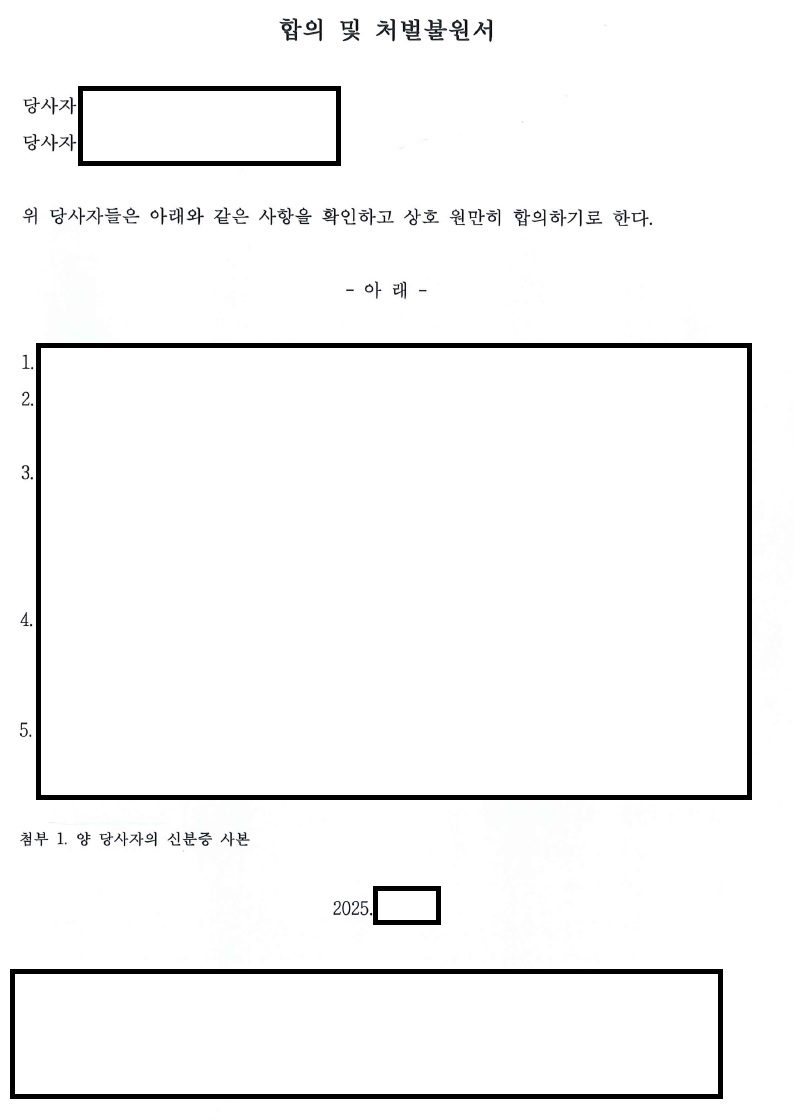
[This document is a formal Settlement Agreement and Non-Punishment Petition (합의 및 처벌불원서) from 2025, which serves as a critical legal instrument in resolving disputes between two parties. By signing this document, the parties officially declare that they have reached an amicable settlement regarding a specific incident, with the victim explicitly stating their desire for the offender not to be punished. The agreement allows for the insertion of specific terms—such as compensation amounts or behavioral conditions—and requires the attachment of identification copies from both parties to verify its authenticity. In the South Korean legal system, submitting this petition to the police, prosecution, or court is a vital step that can lead to the dismissal of charges in certain crimes or serve as a significant mitigating factor to reduce the severity of a sentence.]
🔍 FAQ: Common Questions Regarding Settlements
Q1. Once I get the settlement money, what happens to my civil lawsuit?
A1. Most settlement agreements include a clause to “withdraw all currently pending civil lawsuits”. Once the money is received, you submit a Notice of Withdrawal of Suit to the court to finalize the civil procedure.
Q2. Does a settlement erase the director’s criminal record?
A2. For assault, a dismissal of prosecution means it won’t appear as a ‘criminal record,’ though it remains in ‘investigation records’ for a certain period. For coercion, the conviction (such as a suspended prison sentence) will still be recorded even if you settle.
Q3. What if the director spreads rumors about me after the settlement?
A3. If a confidentiality clause was included, this is a breach of contract. You can claim damages or, if they distort facts, file a separate criminal complaint for defamation. Note that courts generally do not interpret ambiguous settlement terms to the disadvantage of the victim.
Q4. Can I settle the criminal case but still sue for civil damages separately?
A4. Yes, provided the agreement explicitly states you are only petitioning for non-punishment in the criminal case and not waiving civil rights. However, any criminal settlement money already received may be deducted from the final civil damage amount awarded by a court.

Final Checklist Before You Sign
- Consult an Expert First: A settlement is a legally binding contract. Always have a lawyer review it before signing.
- Verify Payment Before Submission: Only submit a ‘Petition for Non-Punishment’ or ‘Withdrawal of Suit’ after the money has been fully cleared in your account.
- Store Your Evidence: Keep the signed agreement and proof of deposit for at least 10 years (to align with the statute of limitations for damage claims).
Your rights and dignity are precious values protected by Korean law. Securing fair compensation is the first step toward your recovery.
Attorney Seok Jun Kang


